
Real-World Audience Reach
Reach audiences based on visits, movement patterns, proximity, and location behavior tied to specific places that matter to the campaign.
Location-based programmatic advertising built for audience precision, market intelligence, and measurable campaign reach.
Sirius Ads helps organizations use GeoFencing advertising as a strategic audience-targeting layer within a larger programmatic media system. Through real-world location intelligence, audience segmentation, premium inventory access, and Pulse by Sirius reporting, GeoFencing campaigns can support competitor conquesting, event targeting, local market growth, location-based retargeting, and omnichannel campaign performance.
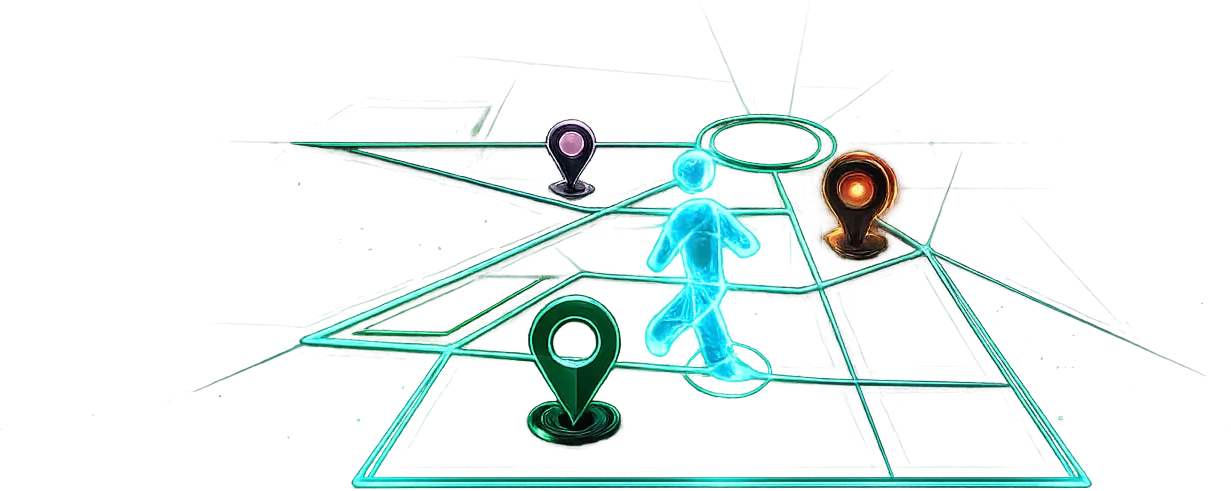
GeoFencing advertising gives organizations a smarter way to reach audiences based on real-world location behavior.
Instead of relying only on broad demographic targeting or general digital placements, GeoFencing allows campaigns to be built around meaningful physical locations, audience movement, competitor environments, event attendance, trade areas, service zones, and high-value geographic markets.
Sirius Ads uses location-based advertising to help organizations connect real-world audience behavior with targeted digital media execution.
Reach audiences based on visits, movement patterns, proximity, and location behavior tied to specific places that matter to the campaign.
Build audience strategies around competitor locations, event venues, trade areas, service zones, campuses, neighborhoods, and priority markets.
Continue reaching audiences after they visit or move through defined locations, helping extend campaign visibility beyond the initial location signal.
Connect GeoFencing with display, mobile, video, audio, Connected TV, native, email, and retargeting channels to reinforce campaign impact.
GeoFencing advertising can serve multiple roles within a larger growth strategy.
| Campaign Goal | How GeoFencing Advertising Supports It |
|---|---|
| Competitor Conquesting | Reaches audiences near or around competitor locations |
| Event Targeting | Engages audiences connected to venues, conferences, trade shows, or high-value gatherings |
| Local Market Growth | Builds audience reach across specific neighborhoods, cities, regions, or service areas |
| Franchise & Multi-Location Campaigns | Supports location-aware audience strategies across multiple markets |
| Retail & Service Area Campaigns | Reaches audiences connected to shopping corridors, service zones, and local trade areas |
| Political & District Outreach | Supports geographic audience delivery around districts, venues, and defined areas |
| Location-Based Retargeting | Re-engages audiences after location-based interaction |
| Omnichannel Reinforcement | Extends location-based audience strategy across display, mobile, audio, video, CTV, native, and email |
GeoFencing advertising is especially valuable when location, proximity, competition, or real-world movement influence audience value.
Common use cases include:
GeoFencing becomes stronger when it is connected to a larger media strategy. Sirius Ads uses location intelligence as part of a broader system designed to improve audience relevance, market visibility, and campaign performance insight.
Sirius Ads approaches GeoFencing advertising as a strategic audience layer, not a simple radius-based tactic.
Through Pulse by Sirius, GeoFencing campaigns can be planned, activated, monitored, and measured with stronger alignment across location strategy, audience targeting, inventory access, reporting, and attribution.
Sirius Ads can help organizations:
The result is a more accountable GeoFencing advertising strategy built around audience precision, location intelligence, and performance visibility.
Competitor GeoFencing helps organizations reach audiences who visit, move through, or spend time near competitor locations.
This can support competitive visibility in markets where audience intent, proximity, or brand comparison matters. For healthcare, automotive, retail, legal, home services, franchise systems, and other competitive categories, competitor GeoFencing can help place media in front of audiences already showing location-based relevance.
Event GeoFencing helps organizations reach audiences connected to conferences, trade shows, community events, sporting events, entertainment venues, recruiting events, or high-attendance gatherings.
Campaigns can be designed to build awareness before an event, engage audiences during an event, or retarget attendees after the event has ended.
Retail and service area GeoFencing can help organizations build audience reach around stores, service territories, shopping corridors, neighborhoods, and regional trade zones.
This is useful for businesses that rely on local demand, market coverage, physical proximity, or service-area awareness.
GeoFencing can support audience strategy across multiple storefronts, territories, branches, regions, or franchise locations.
This allows organizations to build location-aware campaigns while maintaining consistency across larger market systems.
Venue and campus GeoFencing can help reach audiences around universities, hospitals, arenas, convention centers, entertainment districts, business parks, and other defined physical environments.
This can support education, healthcare, recruitment, event, hospitality, political, and awareness-driven campaigns.
Effective GeoFencing advertising depends on location relevance, audience quality, and campaign intent.
Sirius Ads can shape GeoFencing campaigns around market behavior, physical environments, competitor activity, event attendance, audience movement, and broader business objectives.
Targeting options may include:
This allows GeoFencing campaigns to move beyond generic location targeting and support more intentional media delivery.
Competitive environments can reveal valuable audience behavior.
A person visiting a competitor, moving through a relevant trade area, attending a category-specific event, or spending time in a high-intent location may be more valuable than a broad audience segment defined only by demographics.
Sirius Ads can use competitor GeoFencing to support:
The goal is not simply to target nearby users. The goal is to identify location signals that can support smarter media decisions.
Events can create moments of concentrated audience relevance.
GeoFencing can help organizations reach audiences connected to conferences, trade shows, community events, sporting events, entertainment venues, political gatherings, recruiting events, or industry-specific environments.
Sirius Ads can use event GeoFencing to support:
For organizations that need to reach audiences connected to specific physical environments, event GeoFencing can create a more focused media opportunity.
GeoFencing advertising and digital out-of-home advertising can work together, but they are not the same channel.
GeoFencing is focused on building audiences based on real-world location behavior. Digital out-of-home advertising is focused on paid screen-based media placements in physical environments.
Sirius Ads keeps these roles distinct:
This separation helps GeoFencing own the location-intelligence role inside the media mix while other channels support placement, visibility, and reinforcement.
GeoFencing advertising should provide more than confirmation that ads were served near a selected area.
With Pulse by Sirius Reporting, organizations can gain clearer visibility into campaign delivery, audience reach, geographic performance, retargeting activity, creative performance, and attribution-related signals.
Reporting may include:
The goal is to understand how GeoFencing advertising contributes to the larger media strategy, not simply whether a location was targeted.
GeoFencing advertising is especially valuable for industries where location, proximity, competition, or real-world movement influence decision-making.
Each campaign can be shaped around audience behavior, market conditions, geography, seasonality, competitive pressure, and conversion goals.
GeoFencing advertising becomes stronger when it works as part of a connected media strategy.
A location-based audience may be reached through display, mobile, video, audio, Connected TV, native, email, or retargeting campaigns depending on the campaign objective. GeoFencing can also support follow-up media delivery after someone visits a key location or moves through a defined market area.
This makes GeoFencing a valuable location-intelligence layer inside an omnichannel programmatic strategy.
GeoFencing can support:
Sirius Ads brings GeoFencing advertising into a larger media-buying ecosystem built around audience intelligence, location strategy, strategic execution, and performance visibility.
GeoFencing campaigns are supported by Pulse by Sirius, connecting location targeting, media activation, reporting, and optimization inside a more accountable media-buying framework.
Campaigns are shaped around the places, markets, movement patterns, and physical environments that matter most to the organization’s goals.
GeoFencing helps organizations build more relevant audience segments based on real-world behavior, competitor activity, event attendance, and geographic intent.
Pulse by Sirius reporting helps organizations see how GeoFencing contributes to campaign delivery, audience engagement, geographic performance, and broader media strategy.
GeoFencing advertising is planned as part of a larger growth system, not as an isolated location tactic.
GeoFencing advertising is a location-based advertising strategy that allows organizations to reach audiences based on defined physical locations, such as competitor locations, event venues, trade areas, campuses, retail zones, or service areas.
Competitor GeoFencing allows organizations to reach audiences who visit or move through competitor locations. It can support competitive visibility, audience conquesting, and local market growth.
Event GeoFencing allows advertisers to reach audiences connected to specific events, venues, conferences, trade shows, or high-attendance gatherings. Campaigns may support awareness before the event, engagement during the event, or retargeting after the event.
No. GeoFencing focuses on building audiences based on location behavior. Digital out-of-home advertising focuses on paid screen-based placements in physical environments, such as digital billboard and venue-based inventory.
GeoFencing can inform and support display, mobile, video, audio, Connected TV, native, email, and retargeting campaigns. It connects real-world audience behavior with digital media execution.
Sirius Ads uses GeoFencing as part of a larger media-buying ecosystem supported by Pulse by Sirius, audience intelligence, premium inventory access, reporting visibility, and strategic omnichannel execution.
GeoFencing advertising is not about targeting every person near a location. Unfocused location-based advertising creates noise.
Sirius Ads helps organizations use GeoFencing advertising with greater precision, stronger reporting visibility, and better alignment across the media mix.
Through Pulse by Sirius, GeoFencing campaigns can become part of a smarter, more accountable media-buying system built around audience intelligence, real-world location behavior, strategic execution, and measurable growth.